
03 / MISORA
Root canal treatment
Care for an infected or damaged tooth pulp, with the aim of retaining the natural tooth when clinically feasible.
Understanding the treatment
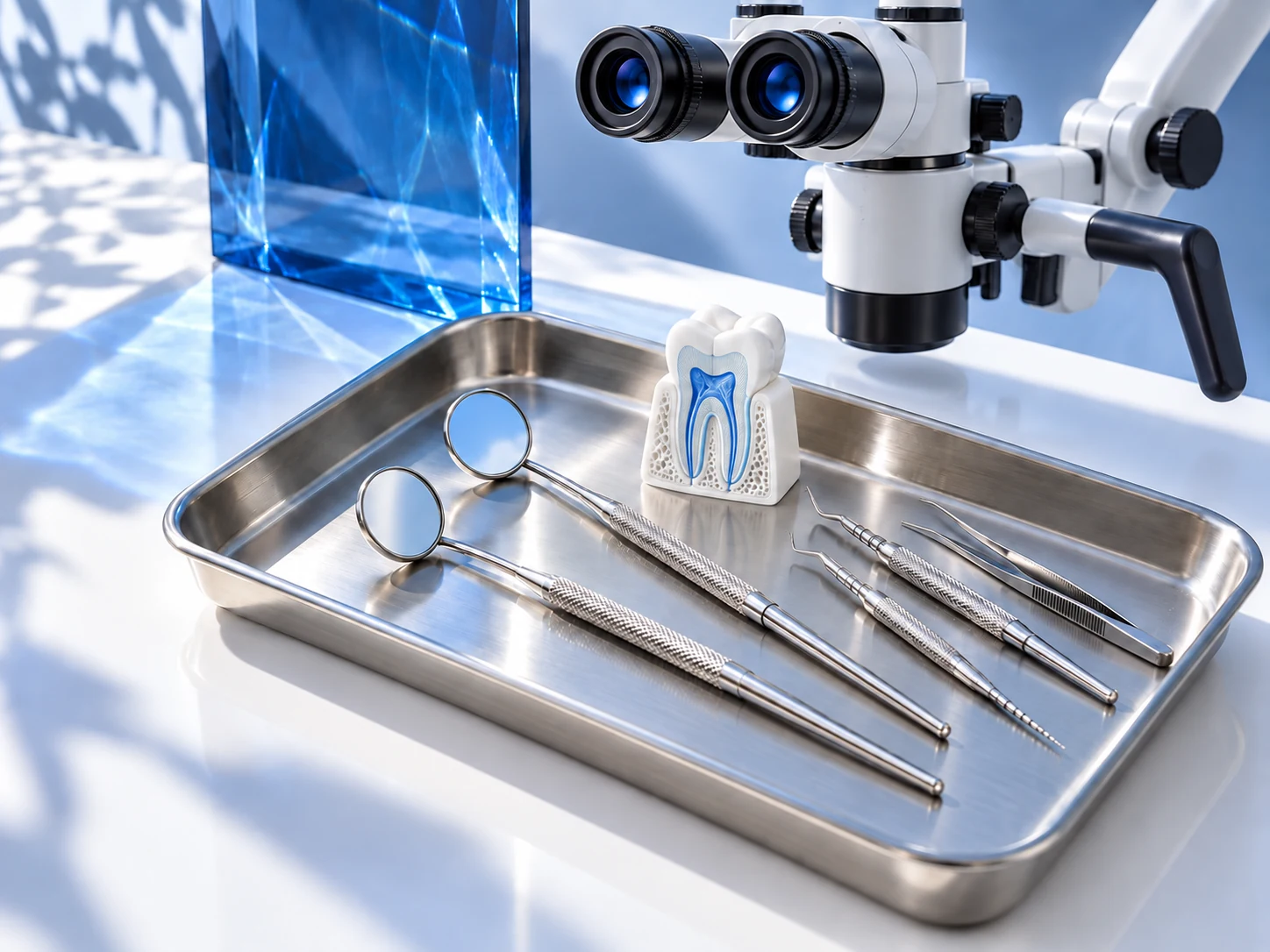
Persistent pain, sensitivity or swelling calls for a diagnosis, not an automatic root canal. Misora examines the tooth, tests it and uses X-rays where indicated. If the pulp is irreversibly inflamed or infected and the tooth can be restored, root canal treatment may help retain it.
When to ask about it
- 01
Persistent tooth pain or prolonged sensitivity
- 02
Swelling or tenderness near a tooth
- 03
A deep cavity, crack or injury that may involve the pulp
These are reasons to seek an assessment, not a diagnosis or promise of suitability.
How care is planned
- 01
Diagnosis and options
Examine the tooth, assess pulp response and take X-rays where needed. Discuss whether restoration, root canal treatment or another option is appropriate.
- 02
Cleaning and sealing
Under local anaesthetic, the tooth is isolated; the affected pulp is removed and the canals are cleaned, shaped and sealed.
- 03
Final restoration and review
The remaining tooth is restored, often with a crown when indicated. Follow-up checks healing and the restoration.
Questions to consider
Does every toothache need a root canal?
No. Pain has several possible causes. Examination and tests are needed before deciding whether a filling, root canal treatment or another approach is suitable.
What happens after the canals are treated?
The tooth needs a final restoration. A crown may be advised depending on the remaining structure and biting forces; the dentist will explain the choice.
Can every tooth be saved?
No. Extensive structural damage or a poor long-term outlook may make extraction or another option more appropriate. The alternatives are discussed after assessment.